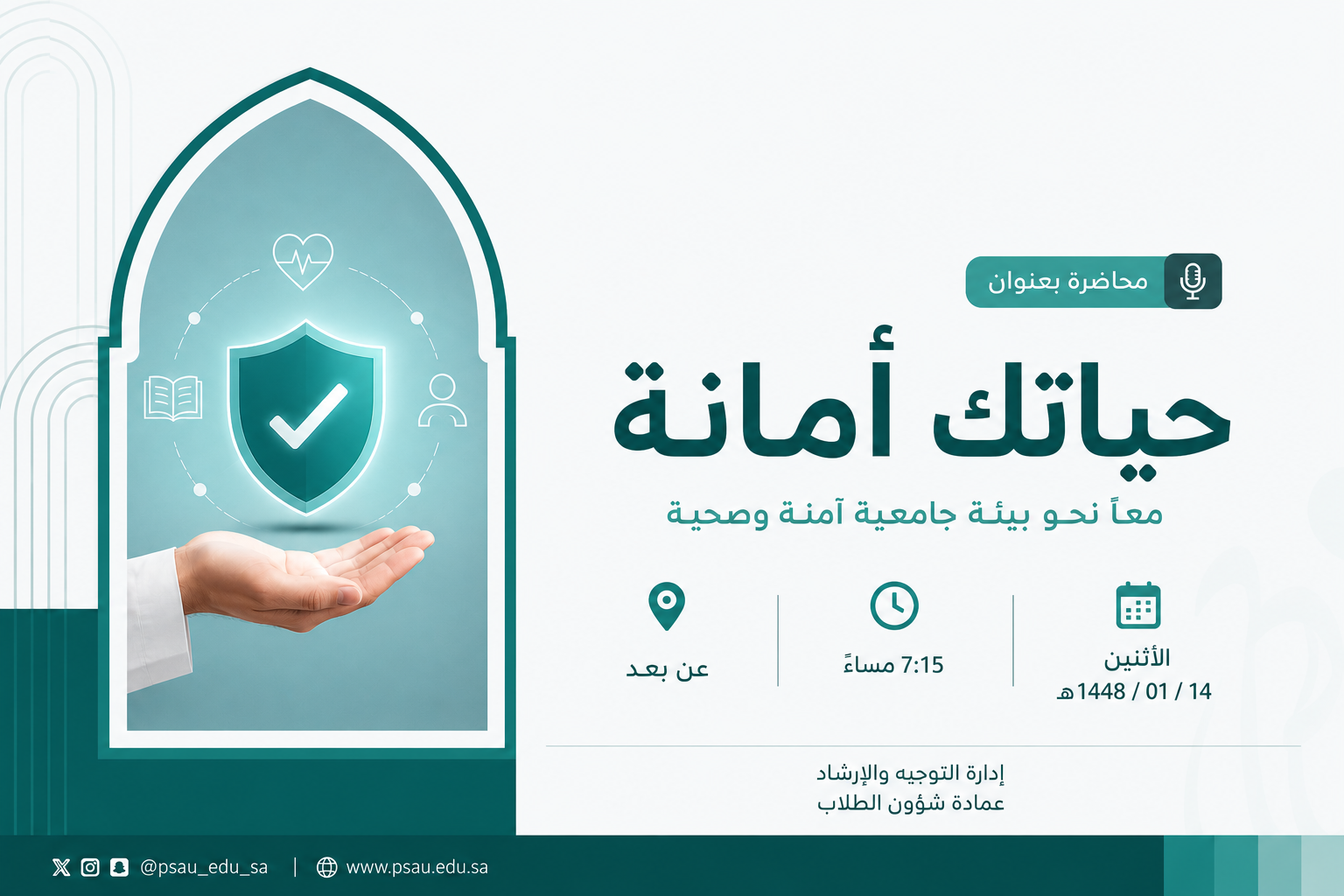


The Deanship of Student Affairs, represented by the Guidance and Counseling Unit, held an interactive online lecture yesterday, Thursday, May 15, 1447 AH (corresponding to May 15, 2020), entitled "The Phenomenon of Bullying in Human Societies." The lecture was presented by Dr. Mohammed Hussein Ramadan, a specialist in psychological and social guidance. The event aimed to raise awareness among students and the academic community about the dangers of bullying as a phenomenon that affects mental and social health, given its increasing prevalence in educational and digital environments.
The lecture focused on various aspects of bullying, beginning with its definition as deliberate and repeated behavior intended to harm others physically, verbally, or psychologically. It then addressed its main causes, such as family pressures, media influences, and cultural differences, and concluded with its broad effects on the individual and society. Dr. Ramadan explained how bullying leads to psychological disorders such as depression and anxiety, decreased academic performance, and the breakdown of social bonds on a wider level.
The session also discussed the personality types involved, such as the bully, who often suffers from low self-esteem or negative environmental influences, and the victim, who may be more vulnerable due to being different or unique. The presentation also identified various types of bullying, including physical, verbal, social, and cyberbullying via social media. It highlighted the long-term effects, such as increased dropout rates from school or even deeper psychological distress, citing global statistics indicating that 20-30% of young people experience bullying annually.
In a practical context, Dr. Ramadan presented effective coping strategies, including supporting the victim by building self-confidence and encouraging early reporting, and confronting the bully through educational programs focused on empathy and positive communication. He emphasized the role of families and educational institutions in implementing preventative campaigns, such as workshops and immediate intervention, to create a safe and violence-free environment.